Getting powder coating thickness mil rating specifications right matters more than most people realize. Too thin, and your finish won't deliver the corrosion resistance or durability powder coating is known for. Too thick, and you risk poor adhesion, cracking, or an uneven finish that looks unprofessional straight out of the oven.
This guide breaks down exactly what mil ratings mean, what thickness range is appropriate for different applications, and how to measure it properly, whether you're a manufacturer specifying coating standards, a fabricator applying finishes daily, or a DIY hobbyist coating your first project.
What Is a Mil in Powder Coating: The Basic Unit
Understanding what is a mil in powder coating starts with a simple definition: one mil equals one-thousandth of an inch (0.001 inch). It's the standard unit used across North America's coatings industry to describe the thickness of an applied finish, whether that's powder coating, wet paint, or other protective coatings.
This measurement matters because coating thickness directly affects performance. A finish applied too thin won't provide adequate protection against corrosion or impact, while excessive thickness can actually weaken adhesion and lead to premature cracking or chipping over time.
Powder Coat Thickness Chart: General Reference Ranges
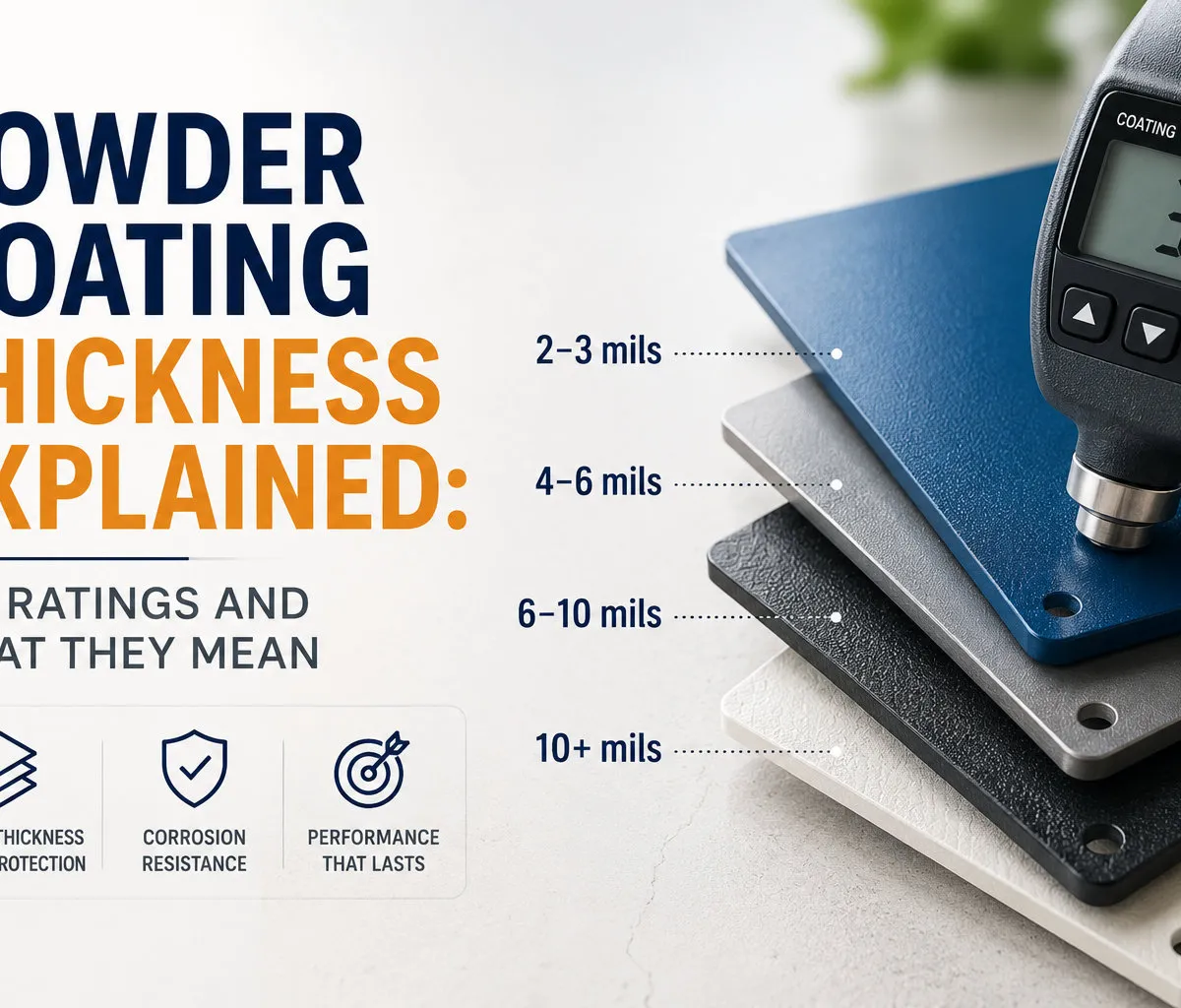
A general powder coat thickness chart provides useful reference points, though exact requirements vary by application and industry standard. Typical ranges include:
- Light decorative applications — Approximately 1.5 to 3 mils, suitable for indoor items with minimal wear exposure
- Standard functional coating — Approximately 2.5 to 4 mils, the most common range for general industrial and consumer products
- Heavy-duty industrial applications — Approximately 4 to 6 mils or higher, used for equipment facing significant wear, impact, or outdoor exposure
- Architectural and automotive applications — Often follow specific industry standards requiring precise thickness ranges, typically between 2 and 5 mils depending on the exact specification
These ranges serve as a starting point, but the right thickness for your specific project should always be confirmed against relevant industry standards or manufacturer recommendations rather than applied as a universal rule.
Ideal Powder Coating Thickness: Why More Isn't Always Better
A common misconception is that thicker powder coating always means better protection. In reality, ideal powder coating thickness follows a sweet spot rather than a "more is better" logic. Coatings applied too thick can develop internal stress during curing, leading to cracking, reduced impact resistance, and a less uniform finish overall.
Conversely, coating applied too thin leaves the underlying metal vulnerable to corrosion, particularly in outdoor applications facing Canada's harsh winters, road salt exposure, and significant freeze-thaw cycles. Getting the thickness right, rather than defaulting to either extreme, is what actually delivers the durability powder coating is valued for.
Powder Coating Thickness Gauge: How Measurement Actually Works
A powder coating thickness gauge is the standard tool used to verify coating thickness after curing, typically using either magnetic or eddy current measurement principles depending on the base metal. Magnetic gauges work on ferrous metals like steel, measuring the magnetic pull between the gauge and the base metal through the coating layer, while eddy current gauges are used for non-ferrous substrates like aluminum.
Quality-focused shops typically take multiple readings across different areas of a coated part, since thickness can vary slightly depending on part geometry, application technique, and electrostatic charge distribution during spraying.
How Thick Should Powder Coat Be: Matching Thickness to Application
Determining how thick should powder coat be for your specific project depends heavily on the item's intended use and exposure conditions. Indoor decorative items generally need less thickness than outdoor furniture or automotive components facing constant environmental stress. Items subject to frequent handling, impact, or abrasion typically benefit from the thicker end of the standard range, since additional material provides more resistance to physical wear over time.
Working with an experienced powder coating provider who can recommend appropriate thickness based on your specific application and local climate conditions helps avoid both under-protection and unnecessary over-application.
Mil Thickness Conversion Powder Coating: Mils to Microns
Understanding mil thickness conversion powder coating specifications require becomes essential when working with international standards or suppliers using metric measurements. The conversion is straightforward: one mil equals approximately 25.4 microns. So a coating specified at 3 mils translates to roughly 76 microns, while a 5 mil coating equals approximately 127 microns.
This conversion matters particularly for manufacturers working with international clients or following standards originally written in metric units, since misreading a specification by mixing up mils and microns can result in a coating up to 25 times thinner or thicker than intended.
Powder Coating Mil vs Micron: Which System to Use
The powder coating mil vs micron distinction largely comes down to regional convention rather than technical superiority. North America predominantly uses mils, while much of Europe and Asia default to microns for coating thickness specifications. Neither system is inherently more accurate, they're simply different units measuring the same physical property.
For Canadian manufacturers and fabricators working primarily within North American supply chains, mils remain the standard reference point, though understanding the micron equivalent is increasingly useful given how globalized sourcing and specification sharing have become.
Powder Coat Thickness Standards: Industry Benchmarks to Know
Various powder coat thickness standards exist depending on your industry and application. Architectural applications often reference AAMA (American Architectural Manufacturers Association) specifications, which typically require minimum thickness thresholds around 2 mils for adequate weather resistance. Automotive and industrial applications may reference standards set by organizations like ASTM, which define testing methodologies alongside acceptable thickness ranges for specific use cases.
Following the appropriate standard for your industry, rather than relying solely on general reference ranges, ensures your finished product meets both performance expectations and any regulatory or warranty requirements tied to that certification.
Measuring Powder Coat Thickness: Best Practices
Properly measuring powder coat thickness requires more than a single quick reading. Best practices include taking multiple measurements across different areas of the part, particularly around edges, corners, and recessed areas where thickness commonly varies due to electrostatic application dynamics. Calibrating your gauge regularly against known reference standards also ensures consistent, reliable readings over time.
For quality control purposes, documenting these measurements systematically, rather than relying on visual inspection alone, provides the verifiable data needed to confirm compliance with project specifications or industry standards.
Powder Coating Thickness for Automotive Parts: Special Considerations
Powder coating thickness for automotive parts requires particular attention, since these components often face intense vibration, road debris impact, and significant temperature fluctuations. Automotive applications typically target thickness in the 2 to 4 mil range, balancing adequate protection against the risk of chipping from stone impacts or flex-related cracking on components that experience regular movement or vibration.
Wheels, brackets, and suspension components in particular benefit from careful thickness control, since both under- and over-application can compromise performance in ways that become apparent only after extended real-world use. You can learn more about the specific standards and quality processes behind properly specified automotive coatings by reviewing Koojo's background and expertise.
Frequently Asked Questions
1. What is the ideal powder coating thickness for outdoor furniture? Outdoor furniture generally benefits from a thickness range of approximately 3 to 5 mils, providing adequate protection against UV exposure, moisture, and temperature fluctuations common in Canadian climates.
2. How do I convert powder coating mils to microns? Multiply the mil measurement by 25.4 to get the equivalent in microns; for example, 3 mils equals approximately 76 microns.
3. Can powder coating be too thick? Yes, excessive thickness can lead to internal stress during curing, resulting in cracking, reduced impact resistance, and an uneven finish, making it important to stay within recommended ranges rather than assuming thicker always means more durable.
4. What tool is used to measure powder coating thickness accurately? A powder coating thickness gauge, using either magnetic (for ferrous metals) or eddy current (for non-ferrous metals) measurement technology, is the standard tool for accurate thickness verification.
5. Do automotive powder coated parts require different thickness than general industrial parts? Yes, automotive parts typically target a narrower 2 to 4 mil range to balance protection against chipping and cracking risks associated with vibration and impact, compared to broader ranges used for general industrial applications.
Final Thoughts on Powder Coating Thickness Mil Ratings
Understanding powder coating thickness mil rating specifications isn't just a technical detail, it directly determines how well your finished product performs over its lifespan. Whether you're specifying standards for a manufacturing run or checking a single DIY project, matching thickness to your specific application, and measuring it properly with the right tools, ensures you get the durability and finish quality powder coating is known for.
Koojo Custom Powder Coating 10874 Steeles Ave E, Milton, ON L9T 2X8, Canada Phone: (905) 876-7060