Surface preparation standards determine whether a powder coated finish lasts fifteen years or fails within two, and it's a lesson Koojo Custom Powder Coating has built its entire process around over more than a decade in the industry. Applicators, fabrication shops, and quality control teams often focus their attention on the coating itself, the powder formulation, the cure schedule, the film thickness, while treating surface preparation standards as a quick step to get through before the real work begins. That's backwards. Surface preparation standards are the single biggest variable in whether a coating actually bonds and holds up under real-world stress, and this guide covers exactly what those standards require, from initial degreasing through final phosphating.
Why Surface Preparation Standards Matter More Than the Coating Itself
Powder coating can only bond as well as the surface beneath it allows. Surface preparation standards exist because even a premium exterior-grade powder, applied at correct film thickness and cured properly, will fail prematurely if it's sitting on top of oil residue, mill scale, rust, or old coating fragments. Adhesion failure, peeling, bubbling, and localized corrosion almost always trace back to inadequate surface preparation rather than a defective powder batch, a pattern consistent across more than 10,000 items coated at our facility to date.
For quality control engineers reviewing a coating failure, surface preparation standards should be the first thing checked, not the last. A coating that chips or peels within months of installation is far more likely to indicate a gap in surface preparation standards than a problem with the powder formulation itself.
Sandblasting Before Powder Coating: Removing Scale, Rust, and Old Coatings
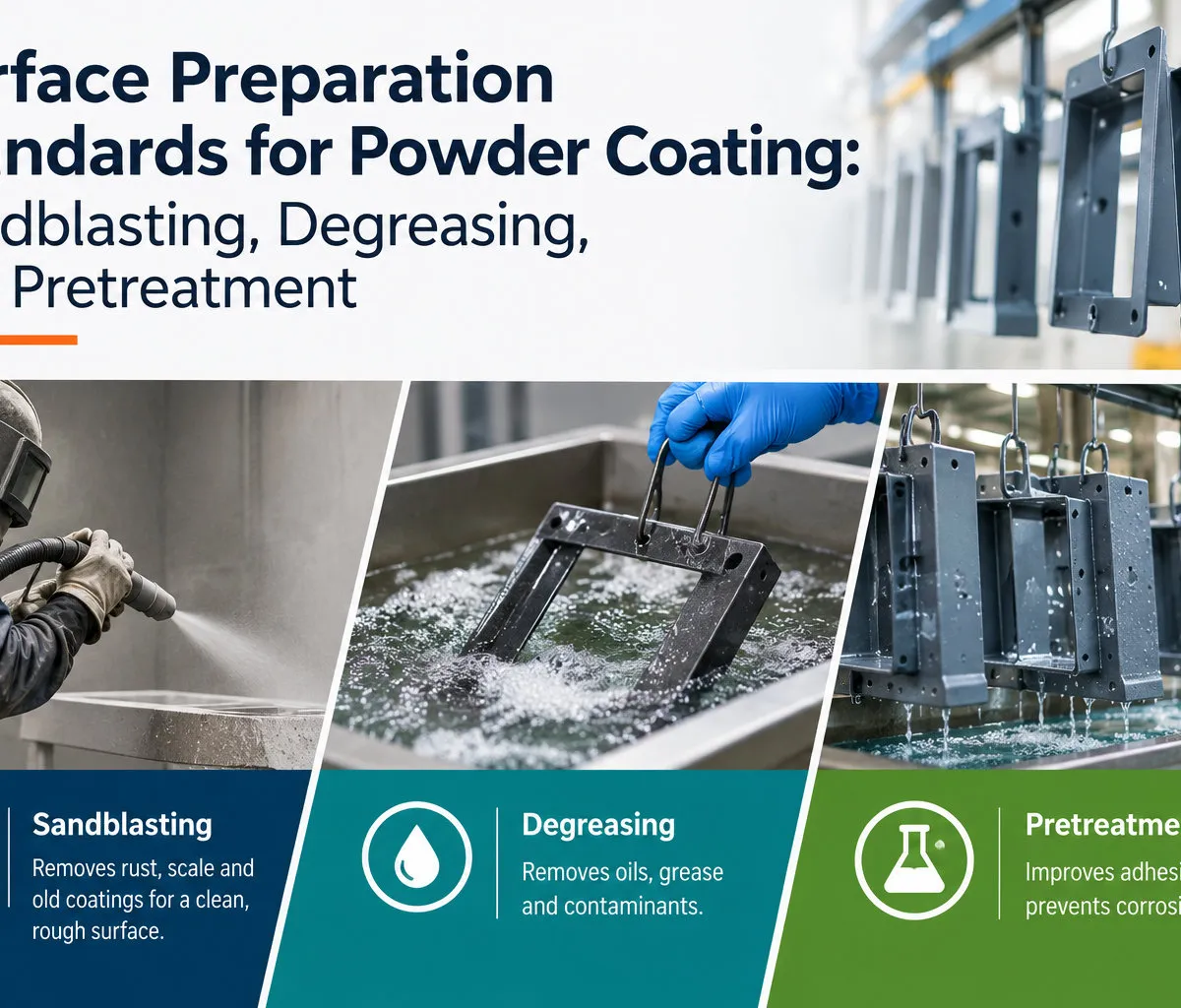
Sandblasting before powder coating, also called abrasive blasting, mechanically removes mill scale, rust, and existing coating from the metal surface, creating both a clean substrate and a slightly roughened profile that improves mechanical adhesion. Surface preparation standards typically specify blast media type and pressure based on the base metal and the condition of the incoming part, since over-aggressive blasting can warp thin-gauge steel while under-blasting leaves contaminants behind.
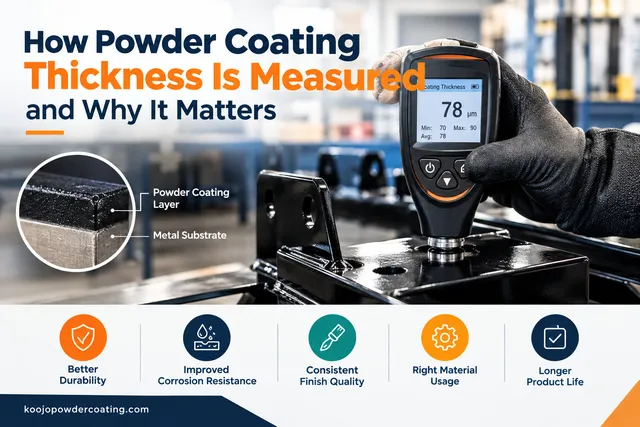
The resulting surface profile, often measured in microns, directly affects how well the powder mechanically keys into the metal. Surface preparation standards for parts that will face heavy outdoor exposure or mechanical wear typically call for a coarser profile than parts destined for lighter indoor service, since a rougher surface gives the coating more to grip onto.
Degreasing Metal Surfaces: The Step Most Often Rushed
Degreasing metal surfaces removes oils, cutting fluids, and handling residue left over from fabrication and machining, contaminants that sandblasting alone doesn't always fully eliminate, particularly in tight corners, threaded holes, or welded joints. Surface preparation standards call for a dedicated degreasing stage before any mechanical or chemical pretreatment, since coating over residual oil is one of the most common and easily preventable causes of adhesion failure.
This step is frequently rushed on high-volume production runs, where the pressure to keep parts moving through the line can lead to shortened dwell times in the degreasing bath, a shortcut that directly violates sound surface preparation standards.
Pretreatment for Powder Coating: Phosphating and Chemical Conversion
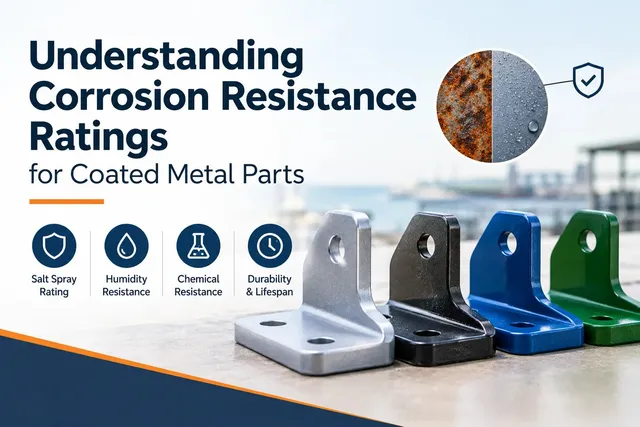
Pretreatment for powder coating typically involves a chemical conversion coating, commonly iron phosphate or zinc phosphate, applied after degreasing and before the powder itself. This conversion layer improves both adhesion and corrosion resistance by creating a stable chemical bond between the bare metal and the powder coating above it, rather than relying on mechanical adhesion alone.
Surface preparation standards distinguish between phosphate types based on the application's corrosion exposure. Zinc phosphate generally offers superior corrosion resistance compared to iron phosphate, making it the more common choice for parts destined for outdoor or industrial environments, while iron phosphate is often sufficient for indoor or lower-exposure applications. Our industrial powder coating services follow a documented pretreatment process matched to each part's intended service environment.
Metal Surface Cleaning Standards: What a Proper Specification Covers
Metal surface cleaning standards for a well-documented powder coating process typically address several linked requirements rather than treating degreasing, blasting, and phosphating as isolated steps:
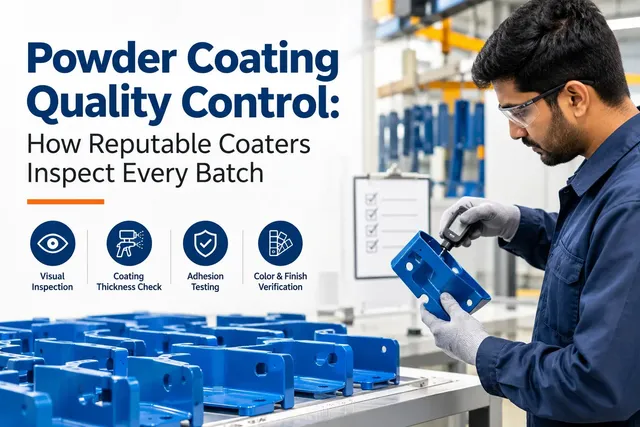
- Visual inspection confirming the surface is free of visible oil, rust, and scale before proceeding to the next stage
- Water-break test to confirm the surface is properly degreased, since water should sheet evenly across a clean surface rather than beading
- Blast profile measurement appropriate to the coating thickness and service environment
- Phosphate coating weight verification, since too thin a conversion layer offers limited corrosion benefit
- Rinse water quality control, since contaminated rinse water can redeposit residue onto an otherwise properly prepared surface
Our project gallery includes examples of industrial parts processed through this full surface preparation standards sequence before coating.
Blast Cleaning and Phosphating Process: How the Stages Work Together
The blast cleaning and phosphating process works as a sequence, not a set of interchangeable options. Skipping blasting and relying on phosphating alone leaves mill scale and heavy rust in place, since chemical conversion coatings aren't designed to remove existing contamination on their own. Skipping phosphating after blasting leaves bare, freshly abraded steel exposed to oxidation during the time between blasting and coating, which can begin forming flash rust within hours in humid conditions.
Surface preparation standards that specify the correct sequence, degrease, blast, rinse, phosphate, rinse again, dry, then coat, exist precisely to prevent these gaps from undermining the finished part's performance. Our certification and quality processes are built around this documented sequence for every batch that comes through the facility.
A Practical Surface Preparation Checklist for Fabrication Shops
Before sending parts out for powder coating, or running an in-house line, fabrication shops and applicators should confirm the following against their own surface preparation standards:
- Base metal type and condition confirmed before selecting blast media and pressure
- Degreasing bath concentration and dwell time documented and consistently monitored
- Blast profile appropriate to the coating thickness and intended service environment
- Phosphate type selected based on corrosion exposure, zinc for outdoor or industrial use, iron for lighter indoor applications
- Time between pretreatment completion and powder application minimized to avoid flash rust or recontamination
Working with a provider that documents and controls each stage, rather than treating surface prep as informal, is the clearest way to avoid failures traced back to weak surface preparation standards. See our facility and process on the about us page, or compare principles in our powder coating vs wet paint guide.
Frequently Asked Questions
Why do surface preparation standards matter more than the powder formulation itself in determining coating lifespan? Even a premium powder coating will fail prematurely if applied over oil, rust, or scale, since adhesion depends on proper surface preparation far more than on the specific powder used.
What's the difference between sandblasting and degreasing in the preparation process? Sandblasting mechanically removes scale, rust, and old coatings while creating a roughened surface profile, while degreasing chemically removes oils and residues that blasting alone doesn't fully eliminate.
Is zinc phosphate always better than iron phosphate for pretreatment? Zinc phosphate generally offers stronger corrosion resistance and is preferred for outdoor or industrial parts, while iron phosphate is often adequate for indoor or lower-exposure applications, so the right choice depends on service conditions.
How quickly does flash rust form after blasting if parts aren't coated promptly? Freshly blasted steel can begin showing flash rust within hours in humid conditions, which is why surface preparation standards specify minimizing the gap between pretreatment and coating.
Can poor surface preparation be detected before a coating failure occurs? Yes. A water-break test, blast profile measurement, and phosphate coating weight check can all flag preparation issues before the part ever reaches the powder booth.
Looking for a powder coating partner that treats surface preparation standards as seriously as the finish itself? Koojo Custom Powder Coating has documented, consistent pretreatment processes for every batch that comes through our Greater Toronto Area facility, with over 10,000 items coated since 2012.
📍 10874 Steeles Ave E, Milton, ON L9T 2X8, Canada 📞 (905) 876-7060