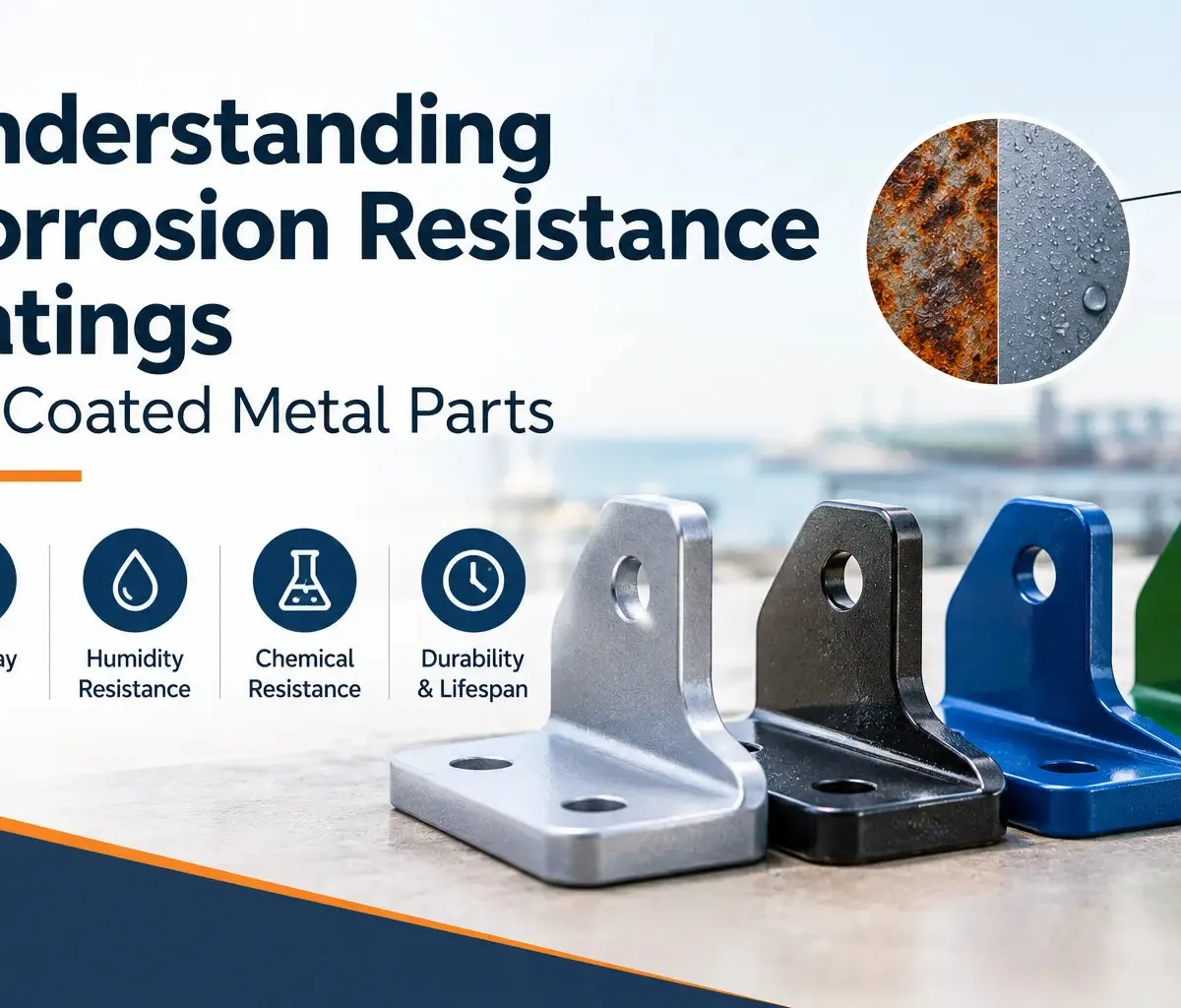
Corrosion resistance ratings are printed on datasheets, quoted in sales conversations, and referenced in specifications, yet most buyers evaluating a coated metal part have never actually seen how those numbers are generated or what they really guarantee, something Koojo Custom Powder Coating addresses directly with every client before a project moves forward. A rating pulled from a lab test under controlled conditions doesn't always translate directly to how a part performs outdoors in real Canadian winters. For engineers, procurement specialists, and manufacturers selecting finishes for outdoor or industrial applications, this guide explains what corrosion resistance ratings actually measure and how to read them correctly.
What Corrosion Resistance Ratings Actually Measure
Corrosion resistance ratings typically come from accelerated lab testing designed to simulate years of environmental exposure in a compressed timeframe, usually a matter of hours or days rather than seasons. The most common method is salt spray testing, where a coated sample is placed in a chamber and continuously exposed to a fine salt fog under controlled temperature and humidity.
Corrosion resistance ratings expressed in hours, such as "500-hour salt spray resistance," refer to how long the coating withstood the test chamber before visible corrosion, usually rust creep from a scribed line, reached a defined threshold. Higher hour ratings generally indicate stronger corrosion protection, but the number alone doesn't capture everything relevant to real-world performance, which is why reading corrosion resistance ratings in context matters as much as the figure itself.
Salt Spray Test Coated Metal Parts: How the Standard Test Works
A salt spray test coated metal part undergoes follows ASTM B117, the most widely referenced salt spray testing standard in North America. The sample is scribed with a controlled scratch down to bare metal, then placed in a chamber maintained at a fixed temperature with continuous salt fog exposure, and inspected at regular intervals for rust creep from the scribe line and general surface corrosion.
Corrosion resistance ratings derived from salt spray testing are useful for comparing coatings under identical conditions, but they're an accelerated simulation, not a direct prediction of real-world service life. A part rated for 500 hours of salt spray resistance won't necessarily last exactly 500 hours outdoors, since actual conditions involve UV exposure, temperature cycling, and mechanical wear that the salt spray chamber doesn't replicate.
ASTM Corrosion Resistance Standards: The Reference Points That Matter
ASTM corrosion resistance standards provide the testing methodology that makes corrosion resistance ratings comparable across different coatings and suppliers. ASTM B117 governs the salt spray test itself, while ASTM D1654 provides the standardized method for evaluating and scoring the corrosion that develops during testing, scribe creep, blistering, and general surface degradation.
Engineers specifying coated parts for demanding environments should request corrosion resistance ratings that reference the specific ASTM corrosion resistance standards used, rather than accepting an unqualified hour figure on a datasheet. A rating without a cited test standard offers little basis for comparing one supplier's corrosion resistance ratings against another's.
Powder Coating Corrosion Protection: Why Pretreatment Changes the Rating
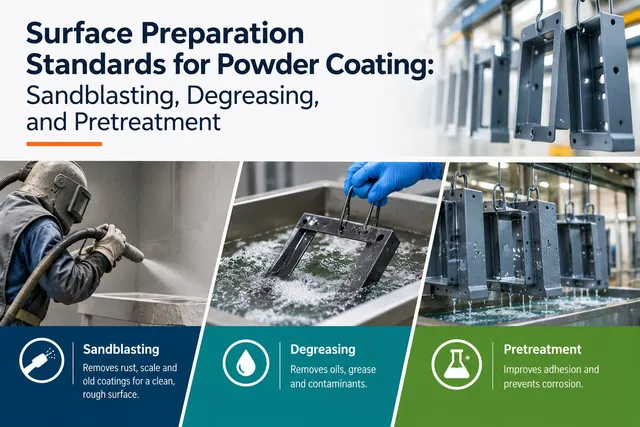
Powder coating corrosion protection depends heavily on what happens before the powder is even applied. Two parts coated with identical powder formulations can achieve dramatically different corrosion resistance ratings depending on whether the underlying metal received proper degreasing and phosphate pretreatment before coating.
Zinc phosphate pretreatment typically delivers stronger powder coating corrosion protection than iron phosphate, which is why parts destined for outdoor or industrial service are commonly specified with zinc phosphate pretreatment to maximize the resulting corrosion resistance ratings. Our industrial powder coating services follow documented pretreatment processes specifically because this step has such a significant effect on final coating performance.
Coating Durability Ratings Explained: Reading Beyond the Hour Number
Coating durability ratings explained properly go beyond the salt spray hour figure alone. Corrosion resistance ratings address one specific failure mode, but a complete durability picture also includes UV stability, impact resistance, and film adhesion, factors that matter just as much for parts facing Canadian winters with freeze-thaw cycling and road salt exposure.
A coating with an impressive salt spray rating but poor UV resistance may still fail prematurely through chalking and fading, even if corrosion specifically isn't the failure mode. Buyers evaluating coating durability ratings explained on a supplier's datasheet should ask what testing covers UV performance and adhesion, not just salt spray hours. Our project gallery includes examples of coated parts that have held up through multiple Ontario winters in real outdoor service.
Corrosion Resistant Metal Finishes: Matching the Rating to the Application
Corrosion resistant metal finishes aren't one-size-fits-all, the right corrosion resistance ratings for a given part depend heavily on its actual service environment. A bracket mounted indoors in a dry facility doesn't need the same rating as a bollard exposed to year-round outdoor weather and road salt spray.
For parts facing genuinely harsh exposure, coastal environments, heavy industrial washdown, or extended winter road salt contact, specifying corrosion resistant metal finishes with documented ratings well above the minimum threshold provides meaningful safety margin against premature failure. Our certification and quality processes document the specific pretreatment and formulation choices behind every corrosion resistance rating we quote to clients.
A Practical Checklist for Evaluating Corrosion Resistance Ratings
Before specifying a coated part based on a quoted rating, engineers and procurement specialists should confirm:
- Which ASTM standard the salt spray hour figure actually references
- Whether the rating reflects the full coating system, pretreatment included, or just the powder itself
- Whether UV resistance and adhesion have been tested alongside corrosion performance
- How the rated service environment compares to the part's actual intended exposure
- Whether the supplier can provide documented test results rather than an unqualified marketing figure
Learn more about our process on our about us page, or see how proper pretreatment affects results in our powder coating vs wet paint comparison.
Frequently Asked Questions
What do corrosion resistance ratings like "500-hour salt spray" actually mean? It means the coated sample withstood 500 hours of continuous salt fog exposure in a controlled test chamber before visible corrosion reached a defined threshold, not that the part will last exactly 500 hours outdoors.
Why don't salt spray hours always predict real-world performance? Salt spray testing isolates corrosion resistance under accelerated, controlled conditions, while real-world exposure also involves UV degradation, temperature cycling, and mechanical wear that the test doesn't replicate.
Does pretreatment affect a part's corrosion resistance rating? Yes, significantly. Proper degreasing and phosphate pretreatment before coating has a major effect on how a coated part performs in salt spray testing and real-world service.
What's the difference between ASTM B117 and ASTM D1654? ASTM B117 governs how the salt spray test itself is conducted, while ASTM D1654 provides the standardized scoring method for evaluating the corrosion that develops during that test.
When comparing corrosion resistance ratings, is a higher salt spray hour rating always better? Generally yes for corrosion resistance specifically, but a complete evaluation should also consider UV stability and adhesion, since a coating can have strong salt spray performance but still fail through fading or chalking.
Specifying coated parts and want corrosion resistance ratings backed by documented testing and proper pretreatment? Koojo Custom Powder Coating has delivered durable, corrosion-resistant finishes for industrial and outdoor applications across the Greater Toronto Area since 2012.
📍 10874 Steeles Ave E, Milton, ON L9T 2X8, Canada 📞 (905) 876-7060