- Client industry
- Food processing
- Part
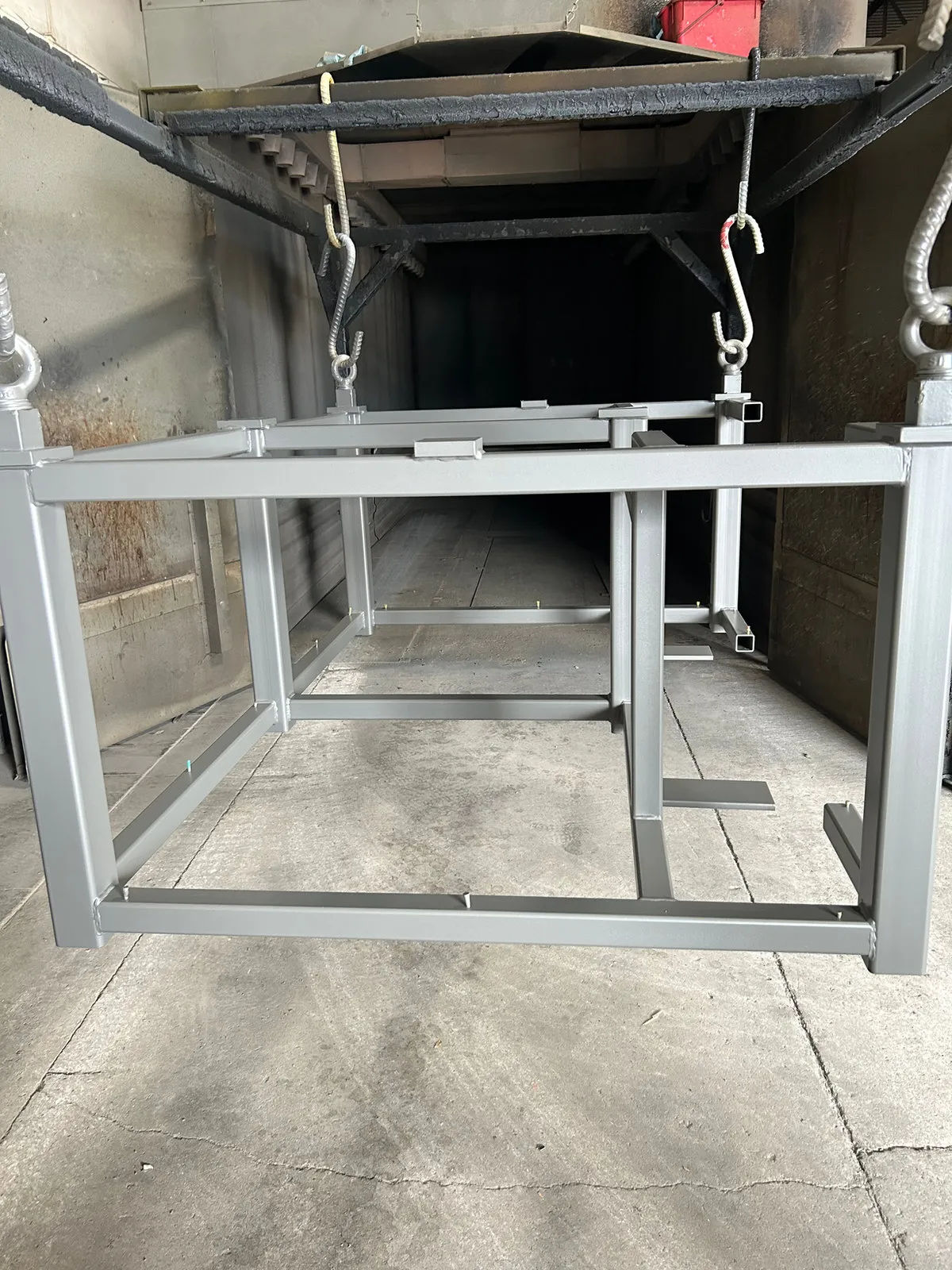
- Frame for a food processing line
Food processing line frame case study: this page follows Koojo Custom Powder Coating as it prepared and finished a welded frame that supports equipment in a food plant's wet processing area. Koojo has operated from 10874 Steeles Ave E, Milton, since 2012, and food producers, equipment builders and manufacturers are among the customers behind our 10,000-plus coated items.
Food plants clean hard and often, so a frame finish has to survive water, steam and sanitation chemicals without chipping, flaking or rusting. Each heading that follows walks through one part of the job on this frame for a food processing line: the problem, the method, the outcome, the numbers and the services. We aim for a 48 hour turnaround on standard work, with the doors open from 7 AM to 5 PM, Monday through Friday. Numbers on this page are pulled from our production records and photos, which lets plant managers and engineers weigh the work on facts. It is a non-food-contact frame, so the coating protects the structure rather than touching product.
Project Snapshot
Item | This job |
|---|---|
Client industry | Food processing |
Part | Welded line frame for a food processing line (non-food-contact) |
Metal | Carbon steel tube and plate with stainless mounting points |
Size / Weight | 12 ft L x 4 ft W x 5 ft H / Approx. 1,600 lb |
Powder | Chemical-resistant epoxy/polyester hybrid |
Colour Code | Sanitary High-Gloss White (RAL 9016) |
Turnaround | 48 hours (standard orders: 48 hr) |
The Challenge
The challenge was to give a food processing line frame a washdown resistant finish that stays intact through daily cleaning, never chips into the production area, and keeps rust away from welds in a space that is wet for most of every shift.
Food plants are tough on coatings. Lines are rinsed with hot water, scrubbed with sanitation chemicals and often hit with high-pressure washdown at the end of each run. Moisture and condensation stay on the frame long after cleaning, so any weak spot in the coating soon turns into rust at a weld or a cut edge. Each weld on the food processing line frame had to be treated as a possible failure point.
The bigger concern is contamination risk. A chip of coating that falls near product is a quality problem, and plant hygiene audits look closely at flaking paint, rust and rough surfaces that trap residue. Chip and flake resistance therefore mattered as much as appearance. That is why this food processing line frame case study starts with hygiene rather than colour.
The frame itself added detail. Its support legs and cross members carry many welds and cut edges, each a place where a thin coat would fail first. Carbon steel frame coating is a common stainless steel alternative for non-food-contact parts, but only when the finish is complete, so full coverage was the goal on this food processing line frame project.
Our Approach
Our approach in this food processing line frame case study had three stages: prepare the steel for a wet environment, apply the powder with full edge and weld coverage, then cure and verify the finish before it went anywhere near the plant.
Preparation
We reviewed the drawing and the plant's requirements with the client first, including where the frame would sit and what it would be cleaned with. Blasting stripped scale and rust back to clean steel that was ready for bonding. Sharp weld spatter was ground back to give smooth weld transitions, because a rough bead is hard to clean and easy to chip. Chemical pretreatment then improved adhesion and corrosion protection in wet areas, and the frame was rinsed and dried right through, including inside every seam. Masking was kept to bolt holes and mounting pads, so the food processing line frame project kept as much protected surface as possible. Preparation like this decides how long a food processing line frame lasts.
Application
Powder selection came before spraying. We agreed on a chemical resistant powder suited to the cleaning regime, and the client chose the colour and gloss level; many plants prefer a light colour finish because residue is easier to spot. Electrostatic spraying then gave strong edge wrap on cut ends and full coverage on welds and inside corners. Hang points were placed away from surfaces that would be visible in service, and the frame was turned so every face of the frame for a food processing line received the same film.
Curing & Inspection
We baked the frame at 180–200 °C for the time the powder's data sheet specifies; the oven can handle items weighing as much as 6,000 lb. Once cool, it went through coating thickness verification under ASTM D7091 across flat panels, corners and weld lines, and an adhesion check under ASTM D3359, with each reading logged to the job. Those records keep this food processing line frame case study traceable for the plant's own audits. For timing, standard jobs leave in 48 hours, and the real figure for the food processing line frame is listed in the snapshot table.
The Result
The plant received a food processing line frame with a cleanable smooth finish, complete coverage on every weld and cut end, and test data in its file, ready to return to a wet processing area without chipping or early rust.
A hygienic finish like this helps sanitation crews clean faster, because residue wipes off a smooth surface instead of sitting in pits and rough welds. Good moisture resistance at the edges protects the frame between cleans, which supports processing line uptime and keeps maintenance off the schedule.
The light, even colour also makes the frame easier to inspect during a sanitation shift. This food line frame case study reflects the standard we apply to all food plant equipment coating, from a single frame to repeat batches for an equipment builder. For background on food-contact rules, see our guide to food safe powder coating.
If you are planning a recoat for food processing machinery, use this food processing line frame case study as a checklist. Ask any coater how they prepare welds, which powder they recommend for your cleaning chemicals and how they record test readings. Those answers decide whether a frame earns a fast return-to-service or a repeat visit. Because the powder and colour are logged, a spare part for the frame for a food processing line can be ordered later in exactly the same finish.
Specs at a Glance
This short table sums up the food processing line frame project in four figures: film thickness, preparation grade, powder and cure. Check them against your plant's own requirements and cleaning regime before you request a quote.
Spec | Value |
|---|---|
DFT (dry film thickness) | 3.5–5.0 mils, measured to ASTM D7091 |
Prep grade | SSPC-SP 10 Near-White Blast & Washdown Pretreatment |
Powder | Sanitary Washdown Hybrid Powder, RAL 9016 |
Cure | 180–200 °C per powder data sheet (15–20 min) |
The Absolute Bureau of Certification has certified our quality system. Our powder coating quality assurance page sets out the checks, and plants can ask for test reports for their audit files. Frames heavier than this one fall under our large part powder coating service, rated to 6,000 lb. Figures for the food processing line frame come directly from our shop job record. Thickness was checked at weld lines and corners, not only on open faces.
Services Used
Behind this food processing line frame project sit three Koojo services working as one process: industrial powder coating, surface preparation and custom powder coating colours. Plants and builders planning similar equipment can read about each one through the links below.
Heavy frames and machine bases like this one are the work of our industrial powder coating service, and powder coating surface preparation takes care of blasting, pretreatment and masking. Custom powder coating colours handle the light colours and gloss levels many food plants specify. Seen from the buyer's side, it is powder coating for food processing equipment done properly, with one team preparing, coating and checking the frame for a food processing line before dispatch. Keeping every step under one roof means the cleaning-regime brief never gets lost between suppliers.
Have a Similar Part?
Tell us about your frames with photos, drawings and a quantity, and refer to this food processing line frame case study so we can repeat the prep and powder. Call (905) 876-7060 from 7 AM to 5 PM on weekdays, or start a powder coating quote online.
Prep, powder and timing are agreed with you first, and our powder coating projects page shows more finished work.